

Overview
The Tulsa County data center project, previously known as Project Clydesdale, is a planned multi-building data center campus located in the Tulsa, Oklahoma region, adjacent to the Cherokee Industrial Park. From the outset, planning has focused on minimizing impacts to surrounding communities, maintaining compatibility with nearby land uses, and ensuring the project delivers long-term economic value.
The campus is designed with substantial setbacks, preserved natural areas, and controlled lighting and sound to limit visibility and operational impact. Required infrastructure improvements, including power and water systems, will be privately funded by Beale.
The project represents a major long-term infrastructure investment on approximately 506 acres, expected to generate significant tax revenue, strengthen regional infrastructure, and provide stable employment while maintaining a low-impact operational profile.
Project Snapshot
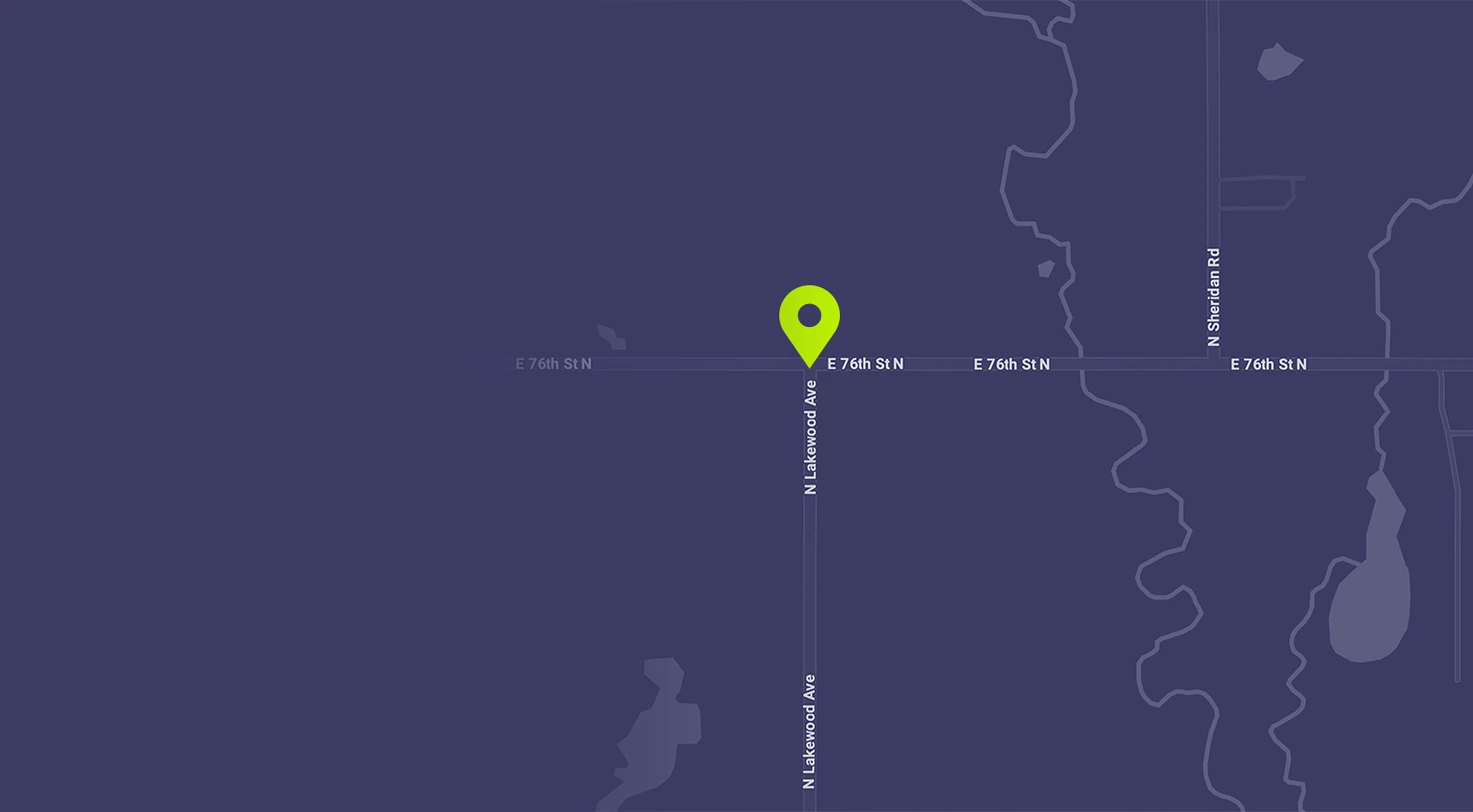
Location
Tulsa, Oklahoma region
Whirlpool Drive & East 76th Street
Adjacent to Cherokee Industrial Park
Approximately 3 miles from Owasso, 5 miles from Tulsa International Airport, and 10 miles from downtown Tulsa
Economic Significance
Major private infrastructure investment across approximately 506 acres
Utility Providers
Electric service provided by Public Service Company of Oklahoma (PSO)
Water provided by Washington County Rural Water District No. 3
Wastewater service provided by the City of Tulsa
Campus Design
Phased hyperscale data center campus including multiple data centers, office buildings, and supporting facilities
Community Benefits
Tax
Revenue
This data center project represents a significant long-term economic investment, with estimated private capital investment of at least $700 million per phase (with a total of four planned phases). The project is expected to generate an initial annual Payment in Lieu of Taxes (PILOT) exceeding $1 million for the first data center, with Owasso Public Schools receiving the largest share with more than $100 million over 25 years. These payments are expected to increase as additional phases are developed.
Infrastructure Improvements
In addition to PILOT contributions, the project provides annual Community Betterment Payments designated specifically for Tulsa County roadway improvements near the project site, including $12.5 million to widen the road along 86th to support traffic flow. These investments support long-term infrastructure upgrades while addressing potential construction and operational impacts.
New
Jobs
The initial phase is expected to support more than 50 full-time operational positions, with salaries exceeding the Tulsa-area median wage of approximately $65,000 and including benefits such as insurance and retirement plans. Construction activity is expected to support between 400 and 800 jobs annually over an approximately seven-year buildout, along with hundreds of contractor roles in operations, maintenance, and security.
Community
First
The Tulsa County data center is designed to deliver substantial economic benefit while maintaining compatibility with surrounding land uses. The project generates significant tax revenue while placing relatively limited demand on local infrastructure, schools, and public services. Beale is also working to establish partnerships with key community organizations that will benefit the region beyond the economic impacts from the project.
Site Plan
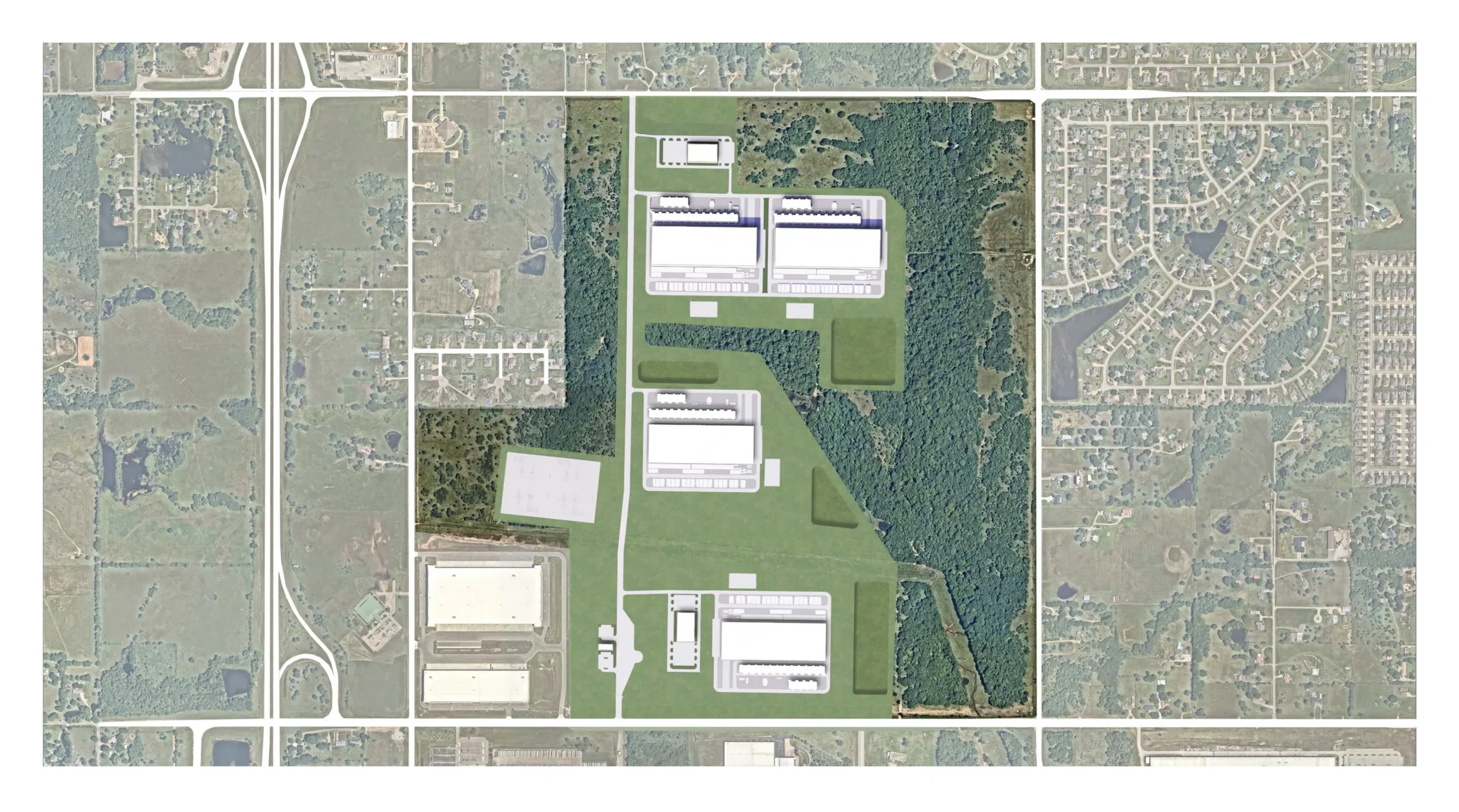
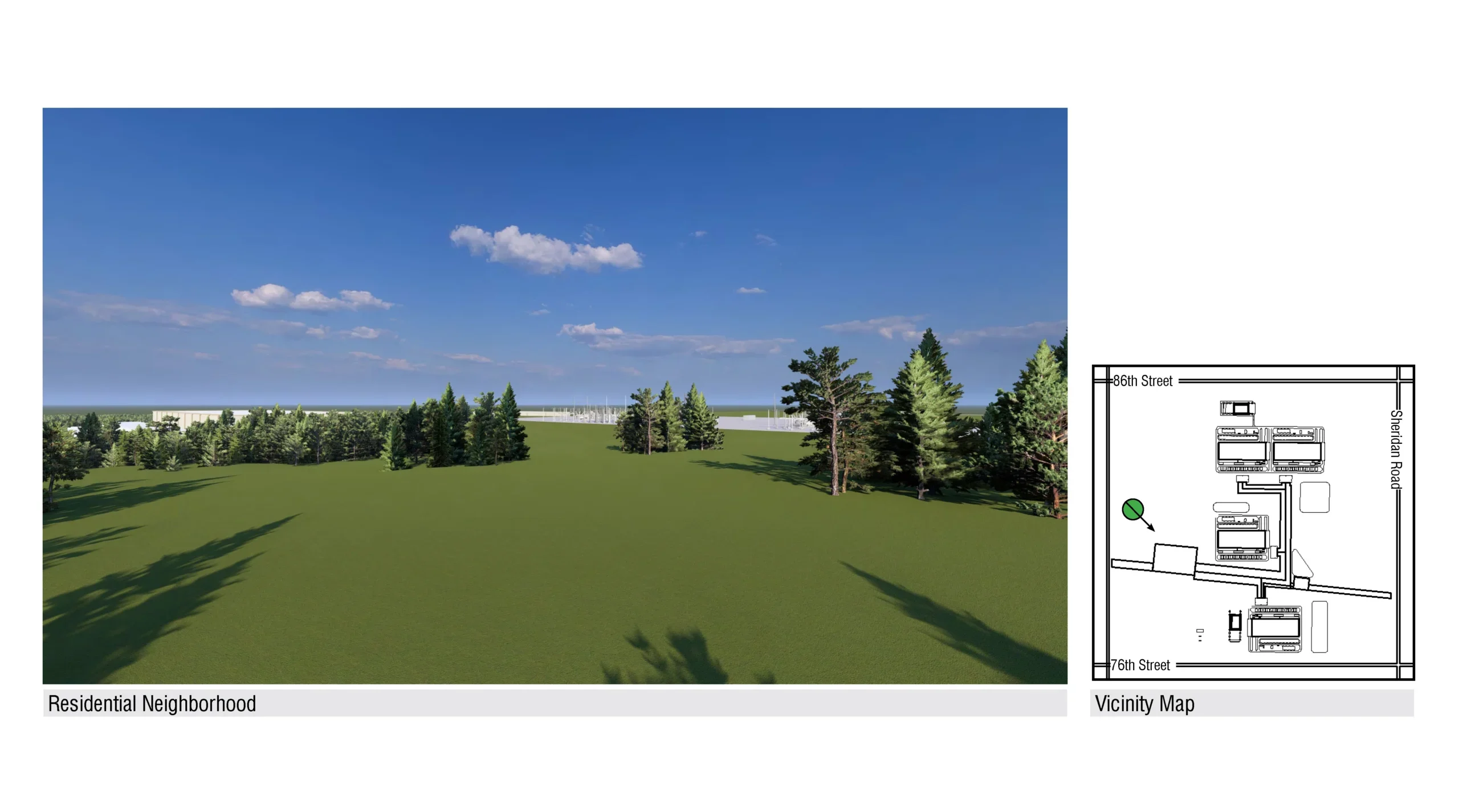
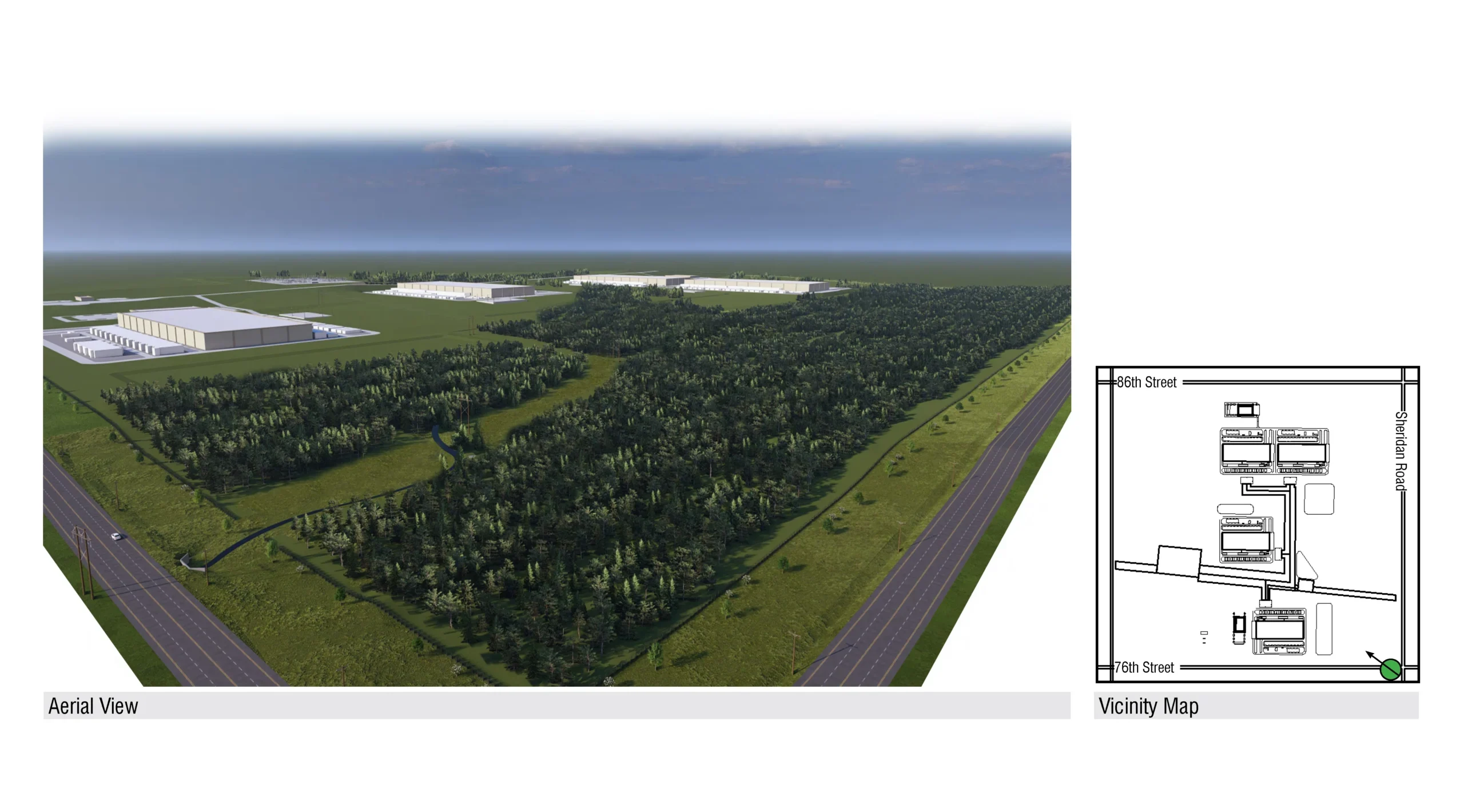
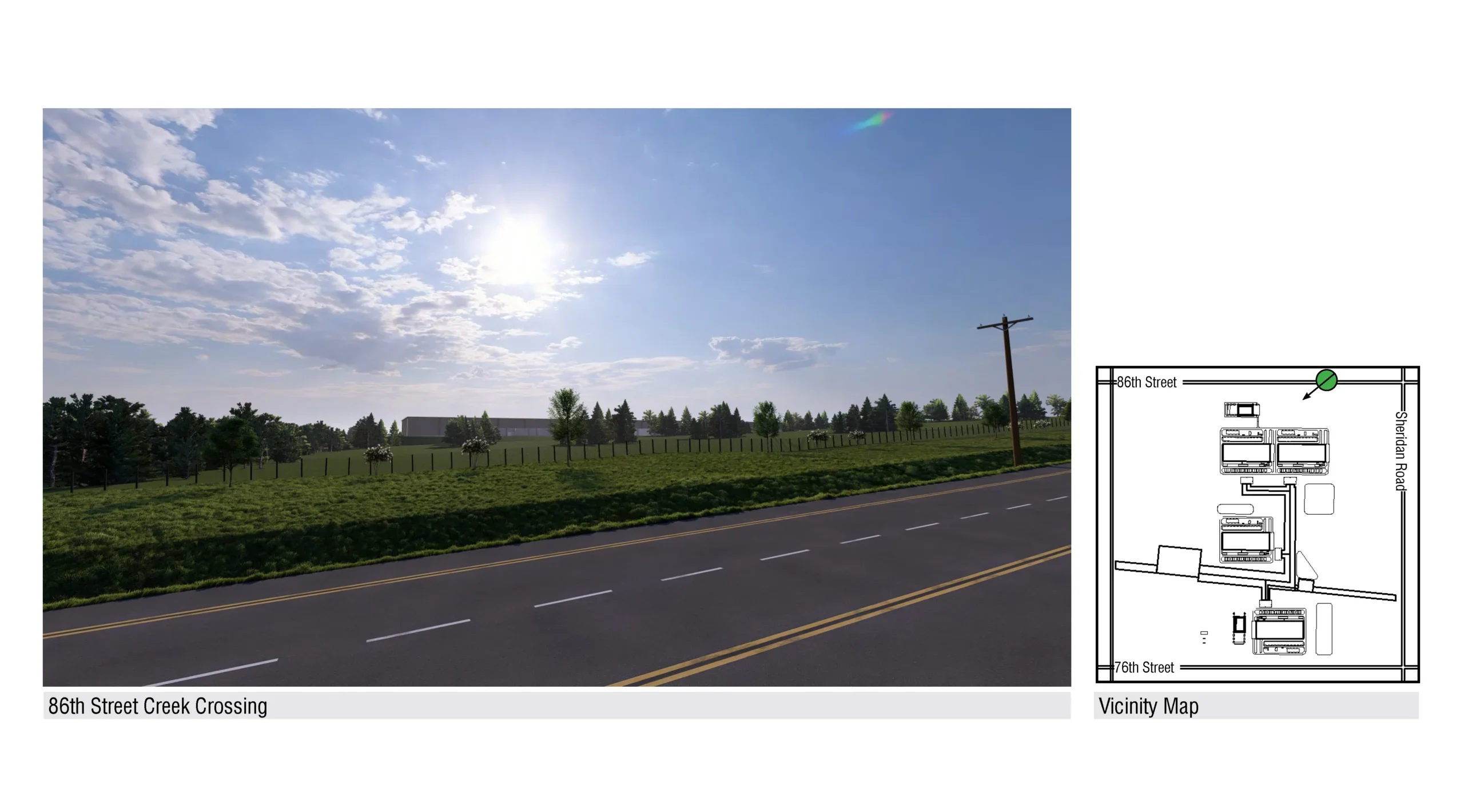
The campus is designed to operate in a way that minimizes visibility and impact to surrounding properties through substantial separation, natural buffers, and controlled operational conditions.
Building setbacks extend up to 300 feet, supported by heavy vegetative buffers ranging from 100 to 150 feet in width. An 815-foot natural area along North Sheridan Road will remain preserved in its existing state, providing additional separation from surrounding areas. Building heights are limited to 70 feet.
Sound levels are controlled to ensure that operations do not exceed 65 decibels at the property line, which is the maximum under emergency conditions. Exterior lighting is designed to remain low in intensity, comparable to a softly lit residential walkway, with strict controls to prevent spillover – including a zero-footcandle limit along the western boundary adjacent to residential areas.
Additional Project Detail
Project Timeline
2025
Fall 2025
Construction Start
2026
2027
Q1 2027
Start of Phase 2
Q3 2027
Phase 1 Completion