
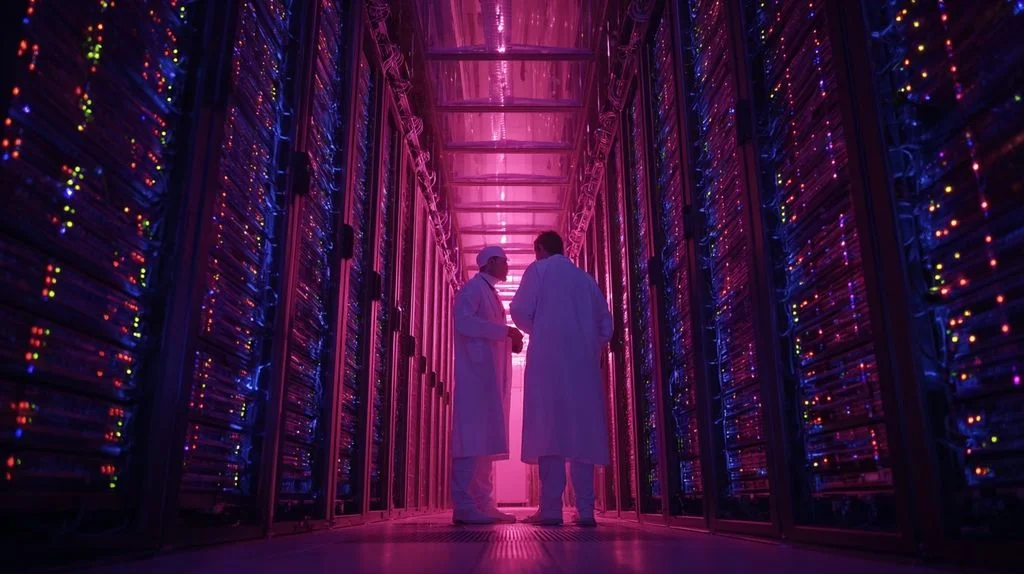
From the outside, a data center can look like a quiet, unremarkable building.
Most of the activity happens inside, where systems are designed to run continuously in a controlled environment. While the technology is complex, the day-to-day operation is focused on consistency, monitoring, and reliability.
Always On
Data centers are designed to operate 24 hours a day, every day.
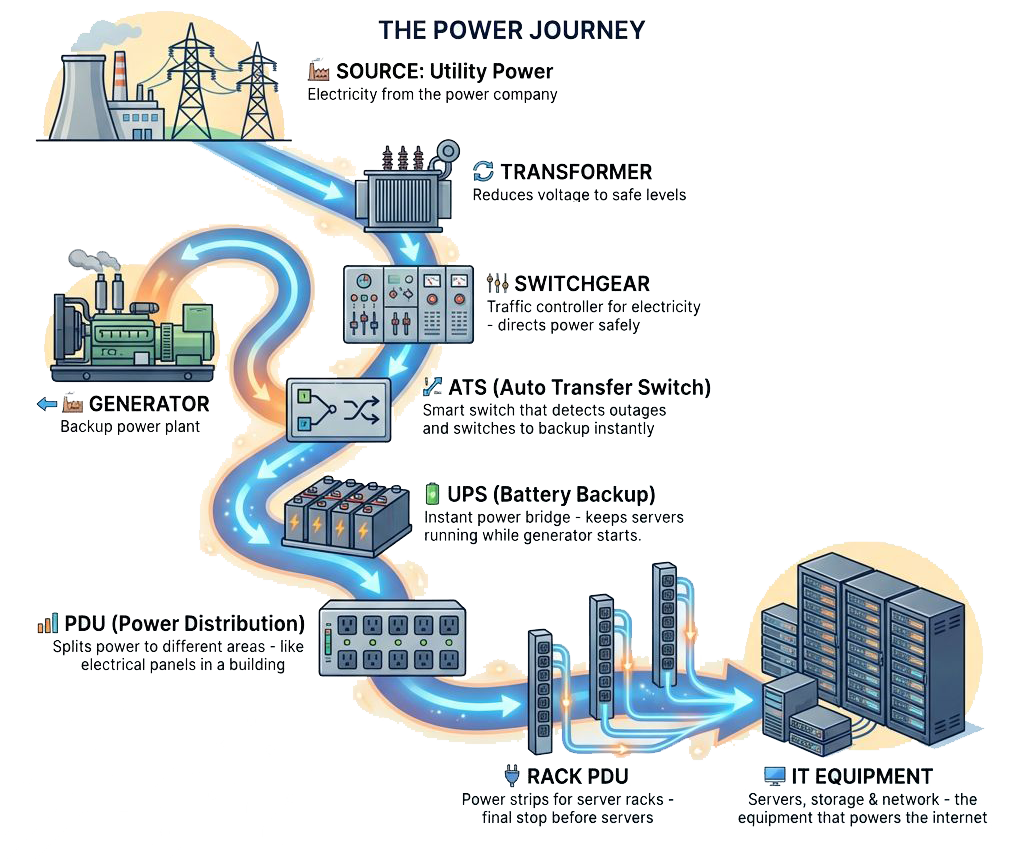
This means systems are built with redundancy, or backup capacity, so that if one component needs maintenance or stops working, another can take over without interrupting service.
For example, if you are streaming a video or accessing an online service, the expectation is that it continues to work without interruption. Data centers are designed to support that level of consistency.
Monitoring and Control
Data centers are continuously monitored to ensure everything is operating as expected.
Monitoring refers to systems that track performance, temperature, power usage, and other conditions in real time. This allows operators to identify and address issues before they affect performance.
For example, if a piece of equipment begins to run warmer than expected, systems can flag it early so it can be addressed before it becomes a larger issue.
Managing Temperature
The equipment inside a data center generates heat as it operates, which is why temperature control is an important part of day-to-day operations.
These facilities are designed to manage that heat internally. Cooling systems maintain a consistent environment inside the building so equipment can operate reliably and efficiently. Data centers are also insulated and engineered to keep conditions stable, rather than allowing heat to build up or escape into the surrounding area.
For example, similar to how a well-insulated home keeps indoor air contained, data centers are designed to control their internal environment as efficiently as possible.
Day-to-Day Activity and Jobs
After construction is complete, data centers typically have a relatively small number of people on site during normal operations.
Most systems are automated and monitored remotely, with on-site staff focused on maintenance, inspections, and ensuring systems continue to operate as expected. This makes day-to-day activity inside the facility relatively quiet and controlled.
At the same time, data centers support a much broader workforce beyond the building itself. Engineers, technicians, contractors, equipment manufacturers, and service providers all play a role in designing, building, and maintaining these facilities over time.
For example, everything from electrical systems and cooling equipment to network infrastructure and ongoing maintenance involves teams working across different locations to keep systems running continuously.
Why It Matters
The goal of daily operations is simple: keep systems running consistently and reliably.
When data centers operate as intended, the services people rely on continue to function without interruption. Most of the time, this work happens in the background without being noticed.
While the technology inside a data center is complex, the day-to-day operation is focused on stability, monitoring, and consistency. These facilities are designed to run quietly and reliably, supporting the systems people use every day.